
Here the process is not pushing yet. It separates from what came before, digests, and feels the body again as a place one can inhabit. Without a house, action leaves empty.
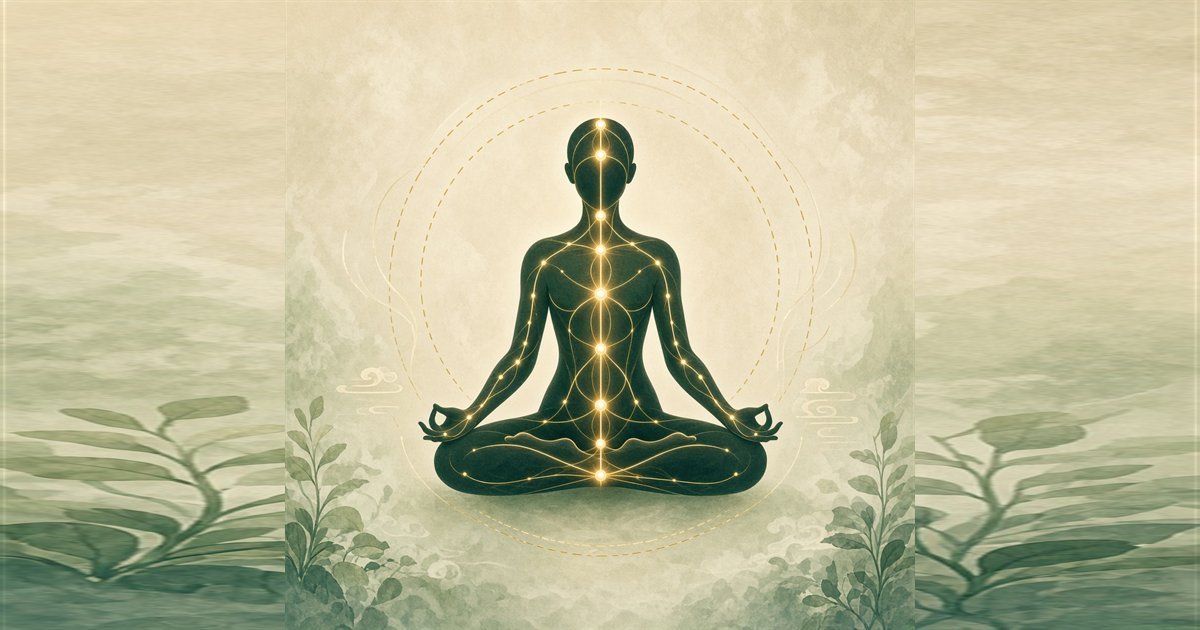
The Gestalt contact cycle, read through the six combined channels: house, journey and commitment.
A whole process separates, senses, kindles, acts, meets and rests. The order on this page is the order of contact. It is not the order of a disease.
Satisfaction hands the process back to separation. In that fertile gap, another figure can begin.
One layer at a time: the lesson, the Gestalt interruption, the study question or the classical channel.
Each movement holds two phases. The house is being. The journey is doing. Commitment is integrating. All three wrap the same cycle.
Here the process is not pushing yet. It separates from what came before, digests, and feels the body again as a place one can inhabit. Without a house, action leaves empty.
Inner charge ripens until it has a direction. First there is energy, still without a fixed object. Then the step. The journey is that step, carried by what Shao Yin has already kindled.
Action meets a response. Contact is staying in relationship without erasing oneself. Satisfaction is gathering the fruit and being able to let go. Without this close, the next cycle drags what was left unfinished.
Gestalt therapy, from Fritz Perls, Laura Perls and Paul Goodman, describes contact as a cycle: something becomes figure, gathers energy, is acted, is met and is released. The Cleveland school spells this out as sensation, awareness, mobilisation, action, contact, satisfaction and withdrawal. Bill Palmer, in Movement Shiatsu at the School for Experiential Education, folds awareness and excitation into Shao Yin so the cycle sits on the six combined channels (liù jīng, 六經). Meridiania teaches that reading as house, journey and commitment. It is a study frame for contact. It is not a diagnosis or a treatment sequence.
Study material. It does not diagnose, prescribe, or replace training in Gestalt or Chinese medicine.
The house
Here the process is not pushing yet. It separates from what came before, digests, and feels the body again as a place one can inhabit. Without a house, action leaves empty.
Separation
LessonTake support, and be able to say no.
Separation closes a previous contact so the next one can start clean. The Stomach studies the capacity to take from outside what nourishes, and to feel the ground, without having to do it all alone. The Large Intestine studies the boundary: pushing away what does not belong, the gesture of no. Together they give a self that can stand distinct without losing support. In the house, this phase is the threshold.
If the cycle breaks · ConfluenceMerging with the other and being unable to stand in a real disagreement. Agreement is wanted, and contact is avoided wherever the world does not match.
Study questionCan this gesture let go of what came before and bear weight, or does it only reach toward the other?
In the classical channelIn the structure of the three yang, Yang Ming closes (阖). Bright, interior, no longer the surface.
Open in the atlas
Sensation
LessonFeel the centre and inhabit one's own space again.
After separation, what was digested becomes support. The Spleen studies the nourishment that rises from the centre and gives tone to the flesh. The Lung spreads it to the surface and opens sensation again: in classical language, the Po, the corporeal soul, and the courage to stay permeable. The phase is recognisable when the body fills its place without collapsing or armouring. In the house, sensation is inhabiting.
If the cycle breaks · DesensitisationContracting or collapsing in order not to feel. The hurt goes quiet, and so does whatever might have nourished.
Study questionIs there tone and a space of one's own, or has the body closed so as not to notice?
In the classical channelTai Yin opens the yin (开). It is the greater yin: from the centre out into flesh and skin.
Open in the atlas
The journey
Inner charge ripens until it has a direction. First there is energy, still without a fixed object. Then the step. The journey is that step, carried by what Shao Yin has already kindled.
Energy
LessonFeel the charge before choosing a target.
The journey does not begin with the step. It begins when sensation becomes conscious excitement. The Kidney studies background vitality, still without an object. The Heart studies awareness of that charge: knowing an impulse is there before it is glued to a goal. Palmer gathers two moments of the Cleveland cycle here — awareness and mobilisation — because Shao Yin is both available emptiness and a fire that already wants to move. Until now the process was mostly inward. From here an act has to be born.
If the cycle breaks · IntrojectionSwallowing someone else's command whole and braking the charge, instead of knowing it and choosing. The “should” caps the impulse before it becomes an act.
Study questionIs the energy felt before it has a target, or has a duty already captured it?
In the classical channelShao Yin pivots the yin (枢). It is the hinge: Kidney water and Heart fire, not yet the step.
Open in the atlas
Action
LessonAlign intention and take the step without a cloud.
Action turns charge into a line. The Small Intestine studies discrimination: which impulse is one's own and which was swallowed undigested. The Bladder studies alignment, the force of the leg continuing through the back to the gaze, like an arrow with a single target. When Tai Yang is working, the whole body says the same direction. On the journey, this phase is the doing.
If the cycle breaks · ProjectionPlacing on someone else's gesture what is not recognised in one's own. The step becomes a judgement of another.
Study questionIs the step a clear line, or does the body push one way while the story goes another?
In the classical channelTai Yang opens the yang (开). In the Shang Han Lun it is the surface. In this cycle it is the act that goes out.
Open in the atlas
Commitment
Action meets a response. Contact is staying in relationship without erasing oneself. Satisfaction is gathering the fruit and being able to let go. Without this close, the next cycle drags what was left unfinished.
Contact
LessonStay in relationship even when there is difference.
To act for real is to meet a response. Contact is not fusion: it is the dance in which each one moves and there is still a shared piece. The Gallbladder studies decision, letting opposing impulses modulate each other, as agonist and antagonist at a joint, instead of fighting. The Triple Burner studies integration: that the gesture of one part belongs to the whole organism and to a context. In commitment, contact is the half that is still underway.
If the cycle breaks · RetroflectionAnswering oneself so as not to hear the other. Self-criticism arrives before the relationship.
Study questionIs there an other in this gesture, or does the dialogue happen only with oneself?
In the classical channelShao Yang pivots the yang (枢). Neither fully outside nor fully inside: the hinge of the meeting.
Open in the atlas
Satisfaction
LessonGather the fruit and be able to go on.
Satisfaction is the moment the impulse rests because there was a real exchange: the response arrived at the centre, not at an armour. The Liver studies the smoothness of that close, a view forward that is no longer dragged by the unfinished, and a store of contentment for crossing the next gap. The Heart Protector, the Pericardium, spreads the impact and keeps the link with the Heart. In the body, this division is studied as a gathering toward the axis. The character 厥 suggests something that persists through difficulty: not rigidity, but remaining oneself when the cycle tightens.
If the cycle breaks · EgotismLooking for nourishment in a commentary on what was lived, instead of in the meeting already finished. Or leaping to the next act without harvesting.
Study questionCan this rest now, or is the next gesture born so as not to feel that the last one was left unfinished?
In the classical channelJue Yin closes the yin (阖). On the channel it is the last embrace toward the centre. In this cycle it is the satisfaction that makes separation possible again.
Open in the atlas
Tai Yang, Yang Ming, Shao Yang, Tai Yin, Shao Yin and Jue Yin are old names. Schools do not all use them for the same thing. Keeping the readings apart is what makes this page useful.
One thread of arm and leg with the same quality. Heaven and earth in a single function, deeper than the meridian alone.
How it is orderedSix pairs, not a disease sequence: Yang Ming, Tai Yin, Shao Yin, Tai Yang, Shao Yang, Jue Yin in the order of this cycle.
Structure of the three yin and the three yang. The Suwen, in the chapter on the parting and joining of yin-yang, assigns who opens, who pivots and who closes.
How it is orderedYang: Tai Yang opens, Shao Yang pivots, Yang Ming closes. Yin: Tai Yin opens, Shao Yin pivots, Jue Yin closes.
Zhang Zhongjing orders cold damage into six syndromes, from the surface toward the depth. There the name designates a disease pattern, not a phase of contact.
How it is orderedTai Yang → Yang Ming → Shao Yang → Tai Yin → Shao Yin → Jue Yin. It may skip, return or combine. It is not the cycle on this page.
A tiny process, told so the six phases can be seen. A study example, not a case.
You leave the sentence unfinished. The previous contact lets go and weight returns to the soles.
The dry mouth becomes figure. There is a sensation of one's own, not yet a plan.
A wanting appears. It has no glass and no path yet: it is charge, Heart and Kidney, before the target.
You stand and walk. The Bladder aligns the step; the Small Intestine has separated this impulse from others.
The hand, the glass, the swallow. A world answers. The gesture is no longer only yours.
The thirst goes quiet. You can return to what you were doing, or do nothing. The cycle can separate again.
If a “should not” appears in the energy and the impulse dies of shame, study stops between Shao Yin and Tai Yang. That does not name a disease. It names where, in this example, the cycle does not complete.
Choose one movement, not all six at once. House, journey or commitment.
Open the two meridians of the pair in the atlas. Read them as one thread: the leg on the earth, the arm toward heaven. The Lingshu puts it this way: the arms reach heaven and the legs stand on the earth.
In study practice ask only this: where does the gesture stop? Separation, sensation, energy, action, contact or satisfaction.
Study material. It does not diagnose, prescribe, or replace training in Gestalt or Chinese medicine.
This page summarises and situates. The source texts remain the source.
The article that joins each phase of contact to a division. The direct source of this map.
The six combined channels as lessons of posture and development, before they are crossed with Gestalt.
The classical chapter of opening, pivoting and closing. Another reading of the same six names.
The six stages as syndromes. Useful so they are not confused with the contact cycle.
The answers keep the frames apart. They do not replace a classical text or a training.